Featured Project: An Arts Council England funded participatory textile project bringing communities together through conversation creativity and stitch, exploring how individual voices and experiences can become part of a shared art work. The journey of this project continues to inform my research into participation, collaboration and the power of making together.
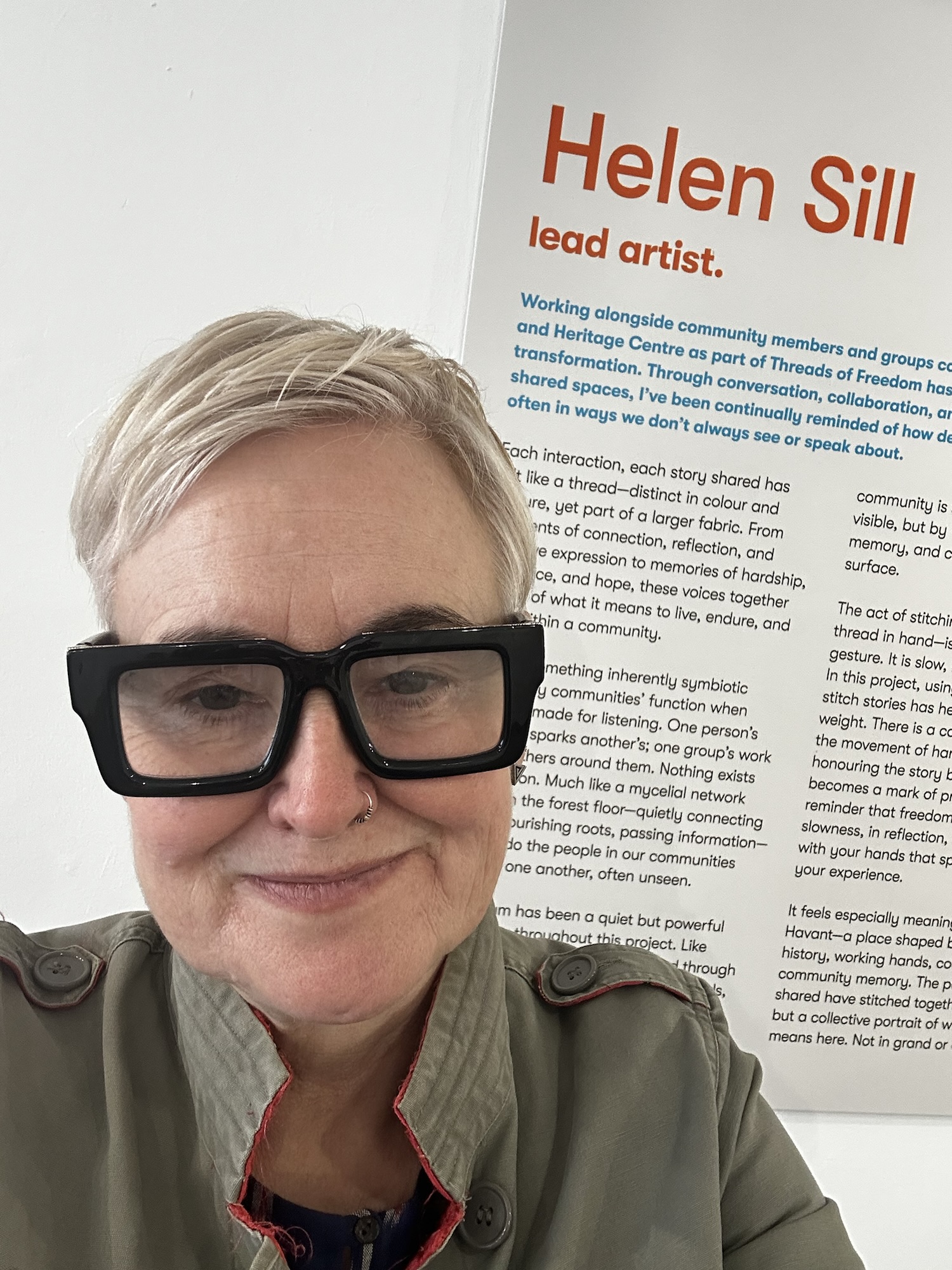
Threads of Freedom has been a truly powerful community project, and it has been a privilege to design and lead it in Havant.Working alongside so many people, hearing their stories and seeing their reflections on freedom take shape through stitch and conversation, has taught me a great deal. Every contribution has helped create something far greater than the sum of its parts.
Now that the main exhibition in Havant has come to an end, I’m excited tosee where this participatory artwork travels next. The conversations don’t stop here—and neither, I hope, does the project’s journey.
What happens next? Watch this space.
The project was exhibited at The Spring in Havant as an evolving exhibition before the completed artwork went on display in January 2026, and it is now available to tour to other heritage, arts, community and educational venues with accompanying workshops.
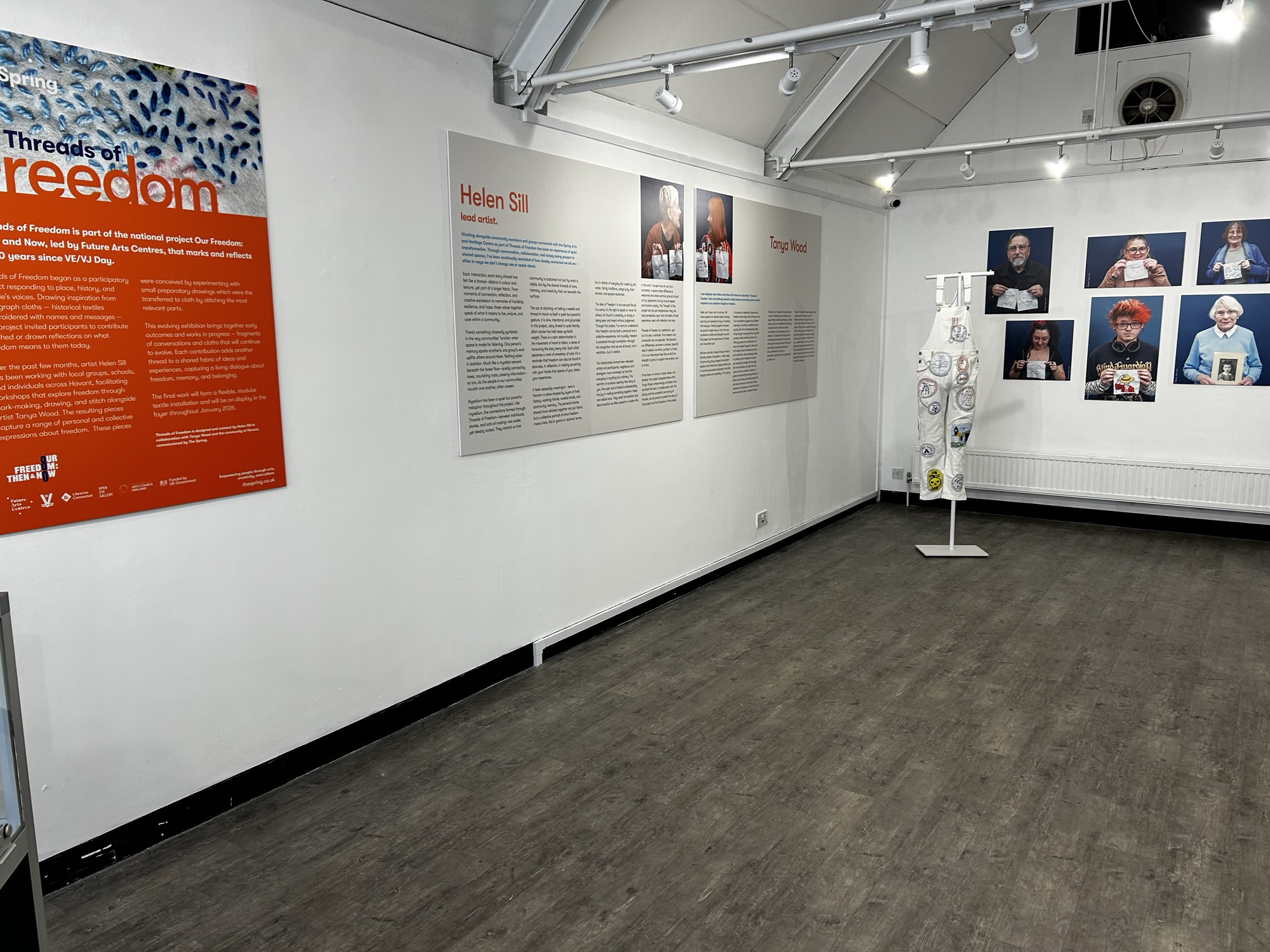

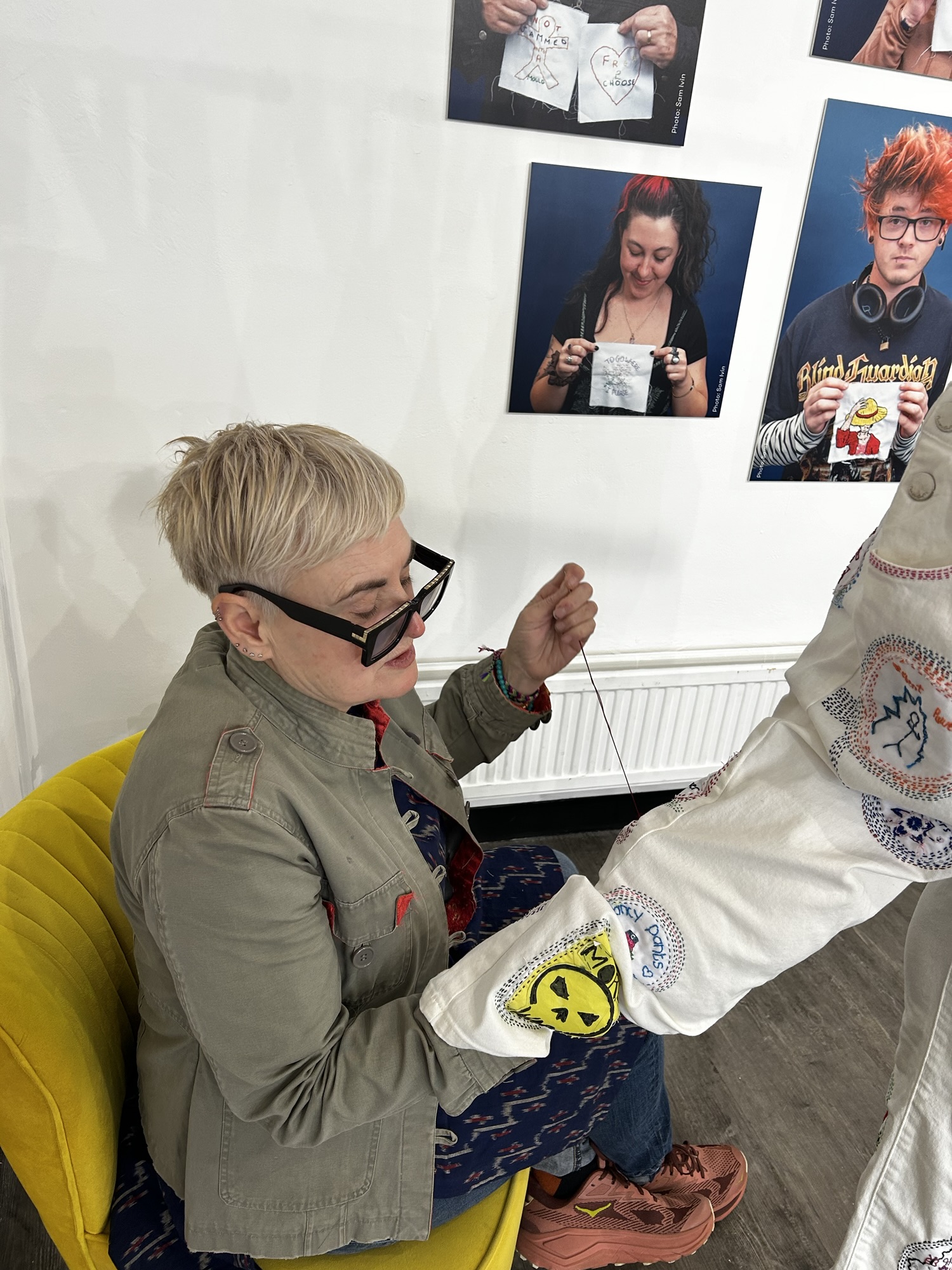

Threads of Freedom brought together reflections on freedom generated and stitched by the community of Havant. Throughout the project, each contribution was carefully stitched directly onto denim dungarees, which served as the canvas. Every material and method of attachment was thoughtfully chosen to honour the individuality of each piece while ensuring the finished works could be displayed securely and beautifully during the exhibition.
A running stitch was used throughout as the method of attachment—not only for its strength but for its symbolism. Found in traditions such as Indian Kantha, Japanese sashiko, and Welsh and North Country quilting, the running stitch is a universal, domestic stitch rooted in everyday making. In keeping with the spirit of “make do and mend,” it has long been used to repair and preserve garments using whatever was at hand. Its use in this project echoed that heritage, allowing each contribution to be added in a way that was modest, resourceful, and handmade—reflecting how people have historically extended the life of clothing and protected what mattered to them through stitch.
Dungarees were chosen as the foundation for their layered social history. Once worn by women working in munitions factories and by members of the Land Army, they have since evolved into a widely worn, non-gendered garment. Since the post-war years, society has changed profoundly: women’s rights have expanded, opportunities have grown, and freedoms of voice and choice have strengthened. The dungarees provided both a practical and symbolic surface to hold the stitched and written expressions of all who took part. Now that the exhibition phase has concluded, the completed works stand as a celebration of shared creativity and the hard-won freedoms that continue to shape collective life.
The richness and detail of the drawn contributions were truly overwhelming. Wanting to honour them fully, the commissioned artists developed a process of tracing and redrawing selected images, creating new works to sit alongside the finished stitched pieces and extend their presence within the exhibition.
Heartfelt thanks go to Tanya Wood for being a brilliant collaborator throughout the development of the project, and to Hermione Grainger and Jane Sims for help with the mammoth task of attaching the many stitched contributions. And of course thank you to all the people of Havant for their wonderful contributions without which there would be no project, the Spring Arts and Heritage centre for awarding me the commission in the first place and Fiona Baxter Co -CEO for her support throughout!

